
中文摘要:
NOD样受体蛋白3(NLRP3)炎症小体在人类急性和慢性肝病中发挥着至关重要的作用。然而,NLRP3在肝脏再生中的作用及其细胞特异性贡献仍不清楚。在这里,我们发现,在70%部分肝切除(PHx)小鼠模型和临床数据中,NLRP3在肝脏再生早期阶段高度激活。全球性NLRP3缺失或药理学阻断NLRP3显著增强了肝脏再生,而NLRP3过表达在PHx后则损害了肝脏再生。此外,与肝细胞特异性敲除(Nlrp3Δhep)不同,髓系特异性敲除Nlrp3的小鼠(Nlrp3Δmye)显示肝脏再生明显改善,与对照组(Nlrp3fl/fl)相比有显著差异。在机制上,Nlrp3缺失促进了髓系-上皮-受体酪氨酸激酶(MerTK)介导的凋亡细胞清除作用,从而诱导巨噬细胞向促修复的Ly6C低表型转化。值得注意的是,通过MCC950抑制NLRP3能够有效逆转高脂饮食小鼠PHx后肝脏再生受损的情况。我们的研究结果为术后肝衰竭的预防和治疗提供了潜在的治疗策略。
英文摘要:
The NOD-like receptor protein 3 (NLRP3) inflammasome plays a crucial role in human acute and chronic liver diseases. However, the role and cell-specific contribution of NLRP3 in liver regeneration remains unclear. Here, we found that NLRP3 was highly activated during the early stage of liver regeneration via 70% partial hepatectomy (PHx) mice model and clinical data. Global NLRP3 depletion or pharmacologically blocking NLRP3 significantly enhanced liver regeneration, while NLRP3 overexpression impaired it after PHx. Furthermore, mice with myeloid-specific knockout of Nlrp3 (Nlrp3Δmye), rather than hepatocyte-specific knockout (Nlrp3Δhep), showed improved liver regeneration compared to control (Nlrp3fl/fl). Mechanistically, deficiency of Nlrp3 promoted myeloid-epithelial-reproductive tyrosine kinase (MerTK)–mediated efferocytosis, thereby inducing macrophages toward a pro-reparative Ly6Clo phenotype. Notably, NLRP3 inhibition by MCC950 effectively reversed the impairment of liver regeneration after PHx in mice fed a high-fat diet. Our findings provide a potential therapeutic strategy for the prevention and treatment of post-hepatectomy liver failure.
论文信息:
论文题目:NLRP3 inflammasome constrains liver regeneration through impairing MerTK-mediated macrophage efferocytosis
期刊名称:Science Advances
时间期卷:Vol 1, Issue 1(2025)
在线时间:2025年1月1日
DOI:doi.org/10.1126/sciadv.adq5786
产品信息:
货号:CP-005-005
规格:5ml+5ml
品牌:Liposoma
产地:荷兰
名称:Clodronate Liposomes&Control Liposomes
办事处:靶点科技
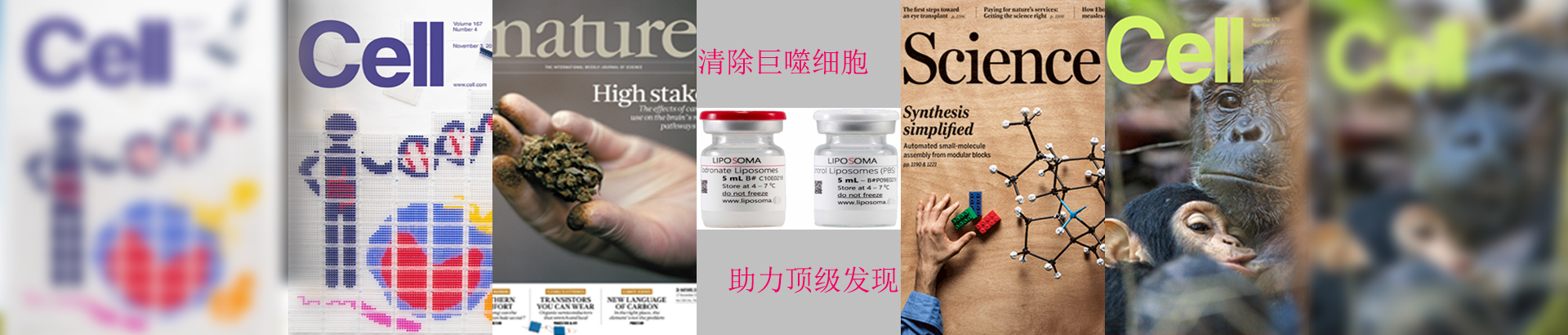
Clodronate Liposomes氯膦酸盐脂质体在小鼠创肝脏再生模型种清除肝脏巨噬细胞。荷兰Liposoma巨噬细胞清除剂ClodronateLiposomes见刊于Science Advances:NLRP3 炎症小体通过抑制 MerTK 介导的巨噬细胞胞葬作用,进而限制肝脏再生。

Liposoma巨噬细胞清除剂Clodronate Liposomes氯膦酸二钠脂质体清除巨噬细胞的材料和方法:
To generate the PHx model, mice were subjected to 70% PHx as our previous description . For macrophage depletion, 200 μl of CLs (Liposoma) and control liposomes were intraperitoneally injected 4 hours before PHx. For hepatic NLRP3 overexpression, the mice were injected with AAV8-NLRP3 (AAV-OE) or AAV-8-NTC (AAV-BL) (General Biology) at a dosage of 1 × 10¹² vector genomes (vg) per mouse intravenously 20 days before PHx operation. For NLRP3 inhibition, MCC950 (TargetMol, no. T3701) was administrated intraperitoneally to a concentration of 20 μg/kg 2 hours before PHx. For MerTK inhibition, UNC2025 (TargetMol, no. T7007) was administrated intraperitoneally to a concentration of 50 mg/kg 2 hours before and 24 hours after PHx. For IL-1β inhibition, IL-1β neutralizing antibody (R&D Systems, no. AF-401-NA) was administrated intraperitoneally to a concentration of 10 mg/kg 4 hours before PHx. For macrophage depletion, CLs (200 μl; Yeasen, no. 40337ES08) and control liposomes (200 μl; Yeasen, no. 40338ES08) were administered by tail vein injection 4 hours before PHx. The mice were humanly euthanized at indicated time after PHx. Blood and liver tissue samples were collected for examination. All animal experiments were approved by the Ethics Committee Medical College of Qingdao University (approval no. QDU-AEC-2021151).
巨噬细胞清除材料和方法文献截图: